The WarKit family
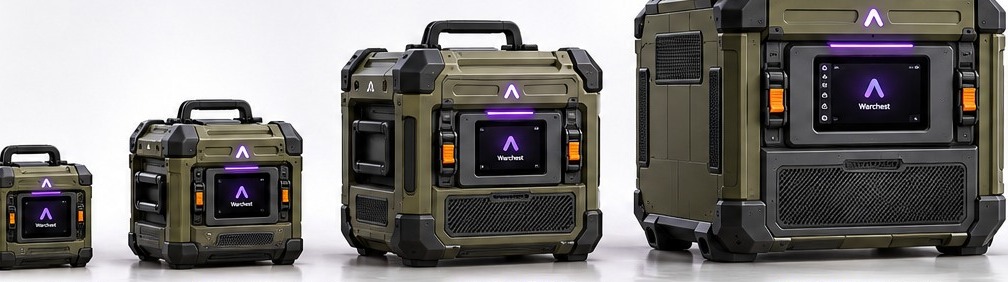
One operating system, one offline trust chain and one set of snap-in Blocks, from a machine one person carries to a depot workshop.
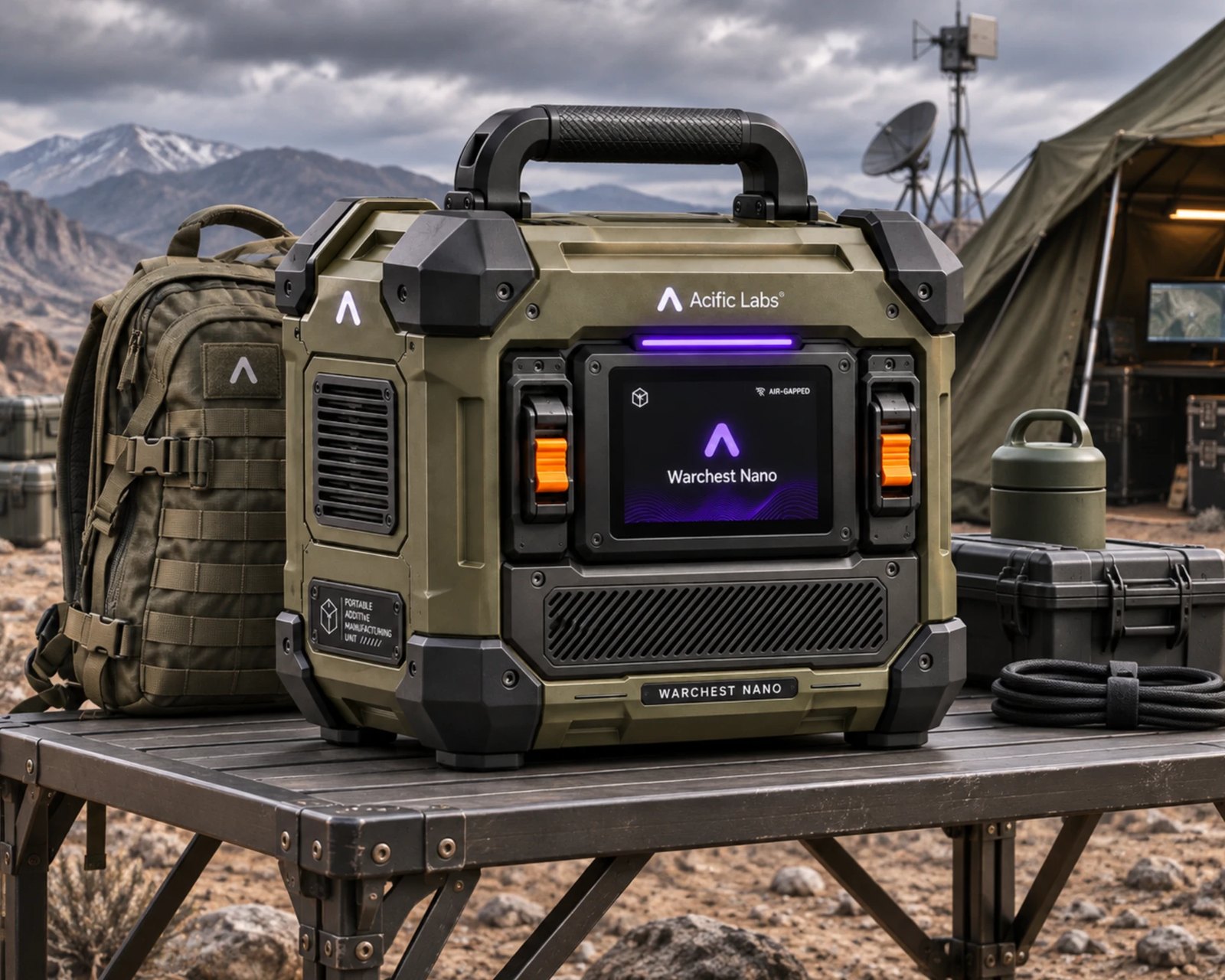
Individual · lead system
Set up on a field table in minutes. Carried in by one person.
Build 100 × 100 × 80 mm · 5–7 kg · 100–160 W
Inside the Nano
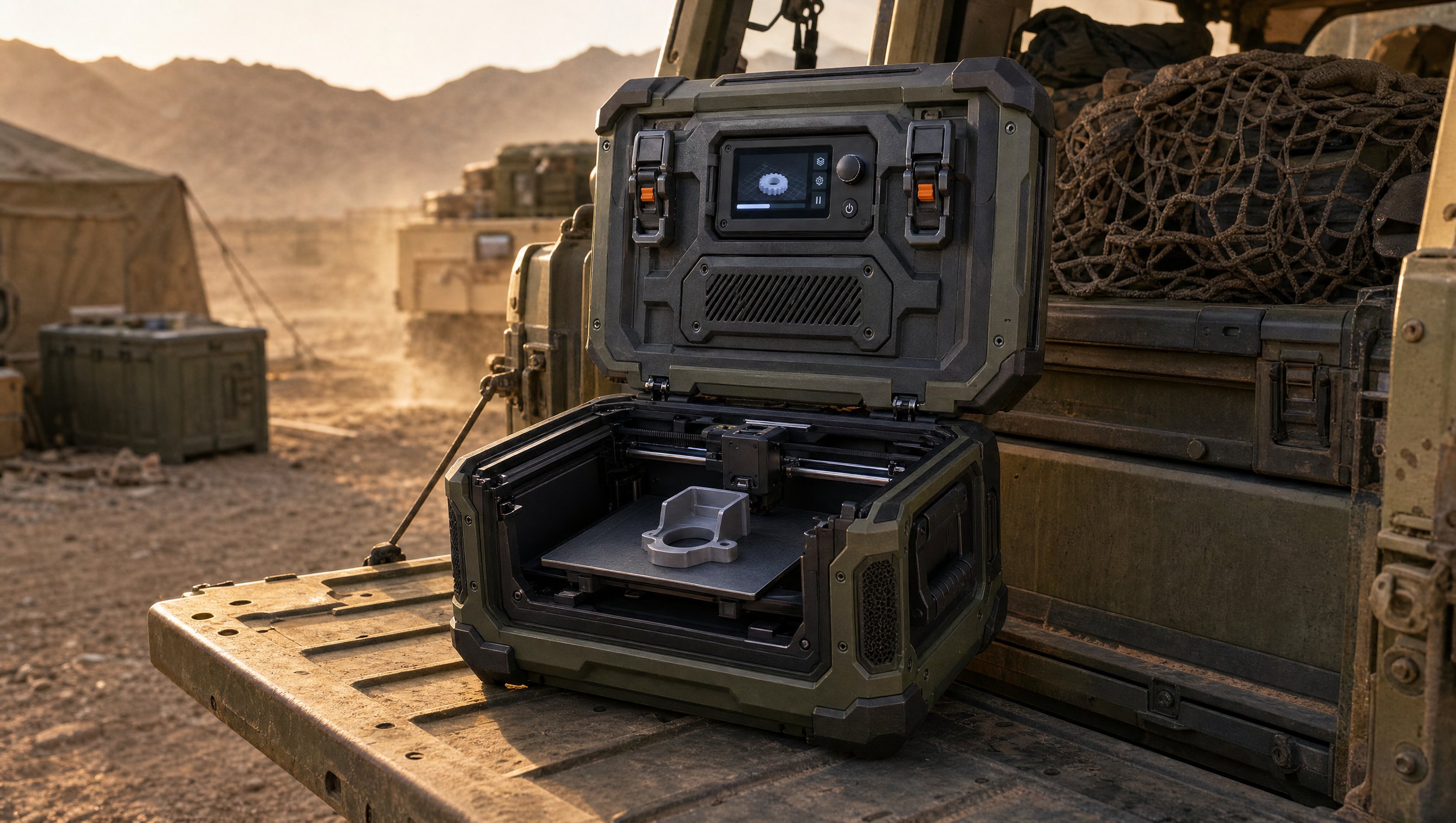
Small team
Opened on a tailgate at a forward base. A suitcase workshop that travels with the team.
Build 150 mm cube · 11–16 kg · 150–300 W
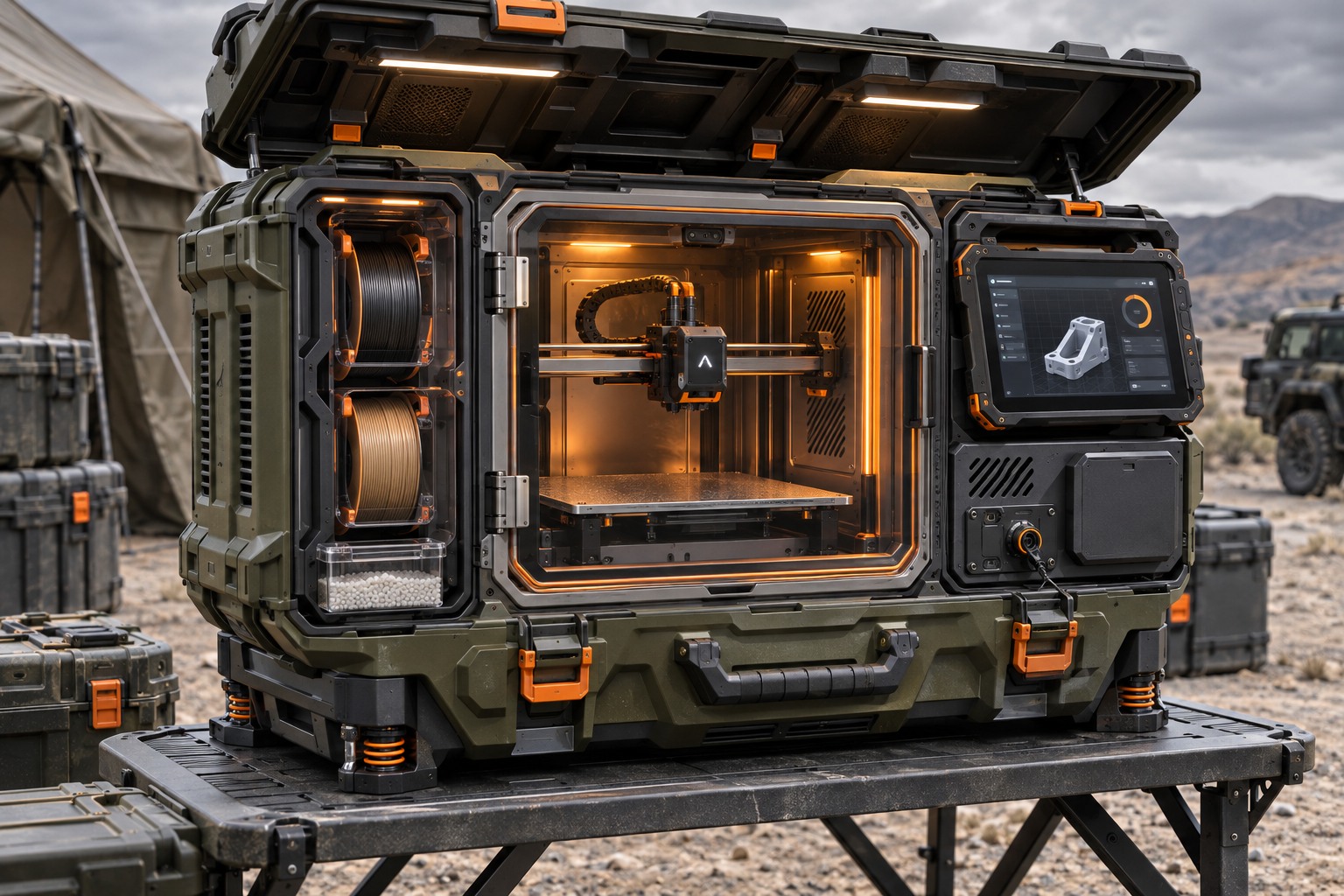
Vehicle · mobile workshop
A full repair station that rides in a vehicle and opens on a stand at camp.
Build 240 mm cube · 30–48 kg · 350–800 W
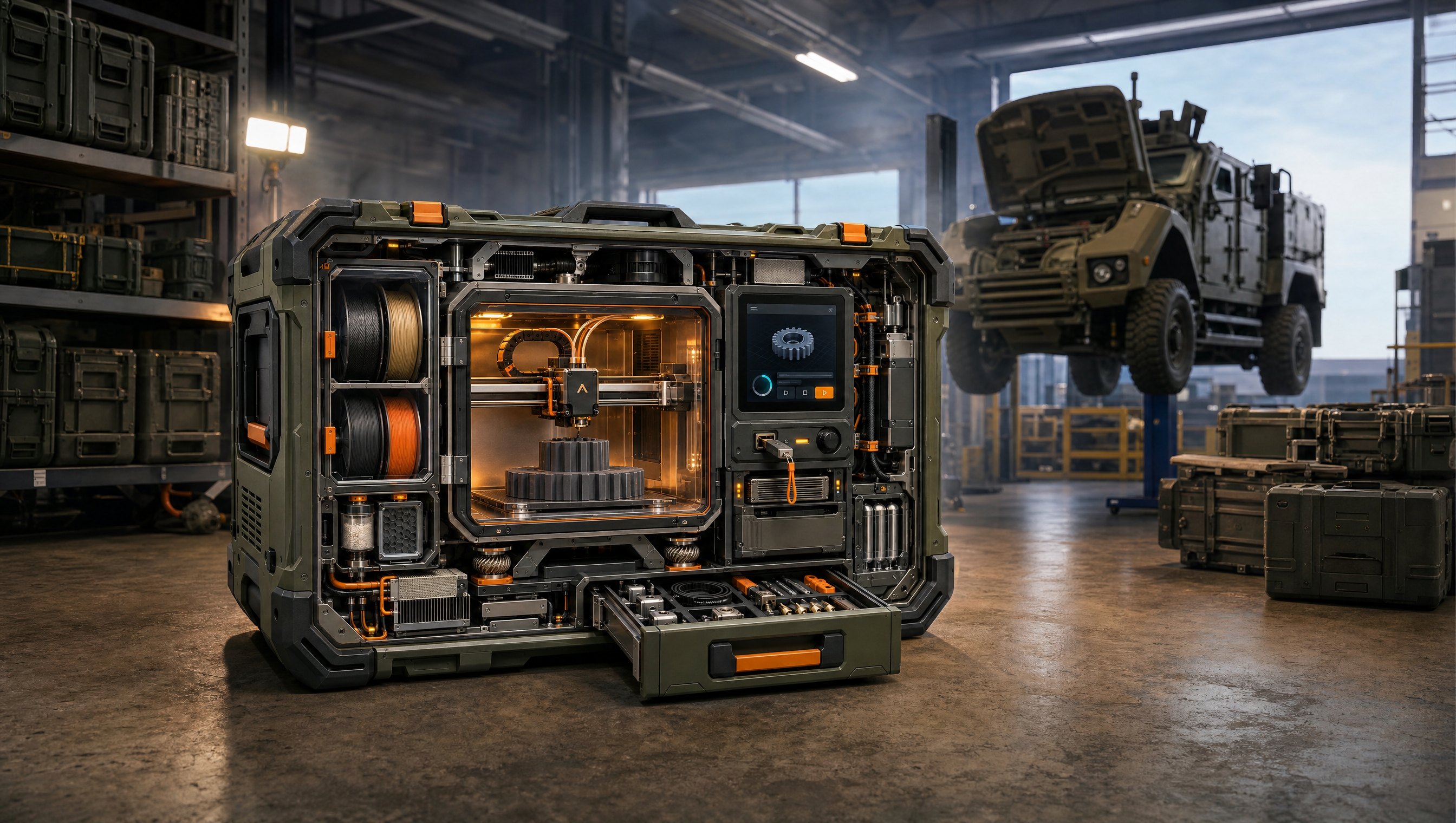
Depot
Running in a vehicle depot. Heated chamber, service drawer, long runs.
Build 300 mm cube · 80–150 kg · 800–2,500 W
Deployable lab
A container workshop flown in and opened in the field. Printing, materials and inspection in one box.
Sling-load is a concept, not a qualification
Inside the Nano
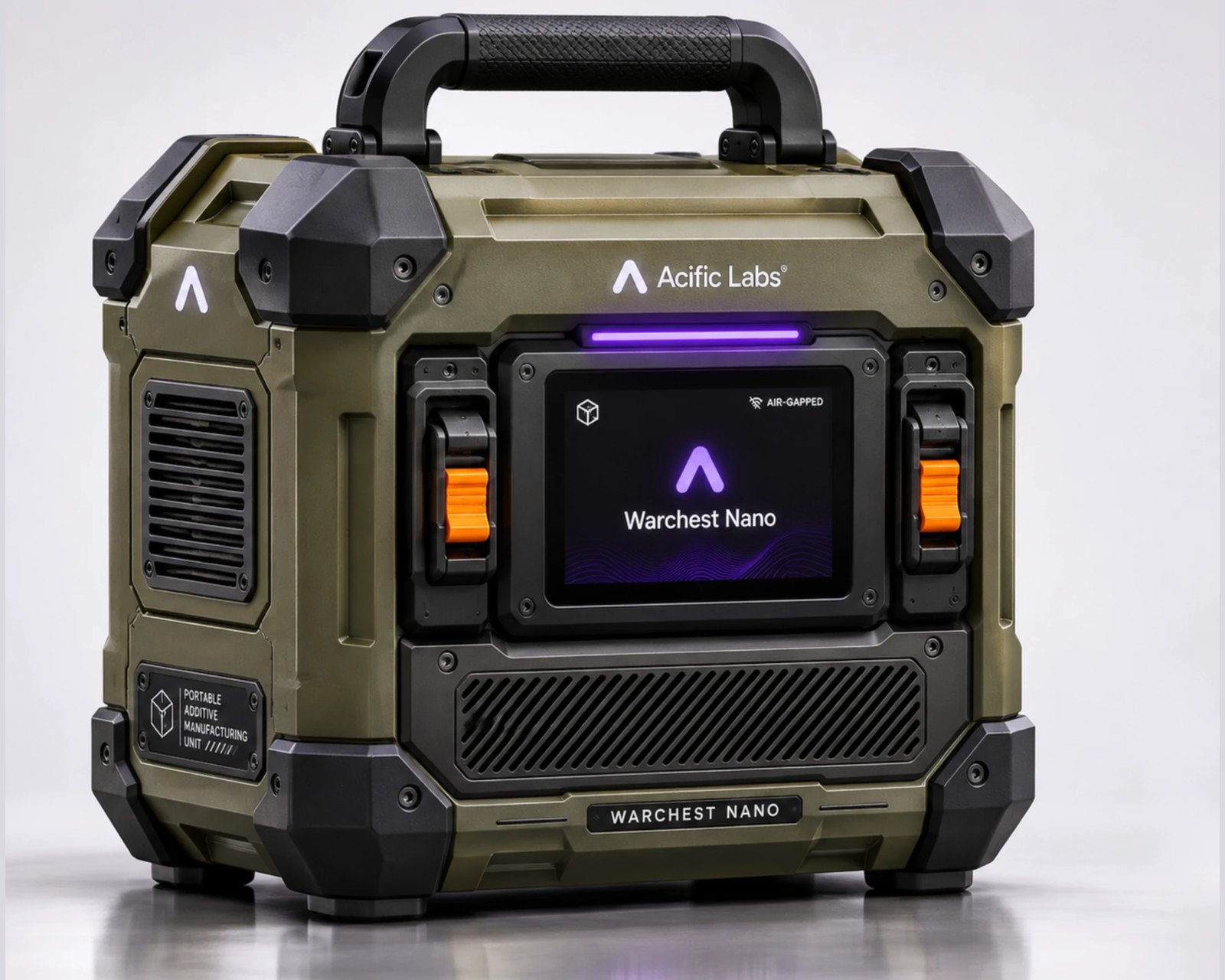
Latched, sealed and padded at every corner. One hand carries it; a backpack carries it further.
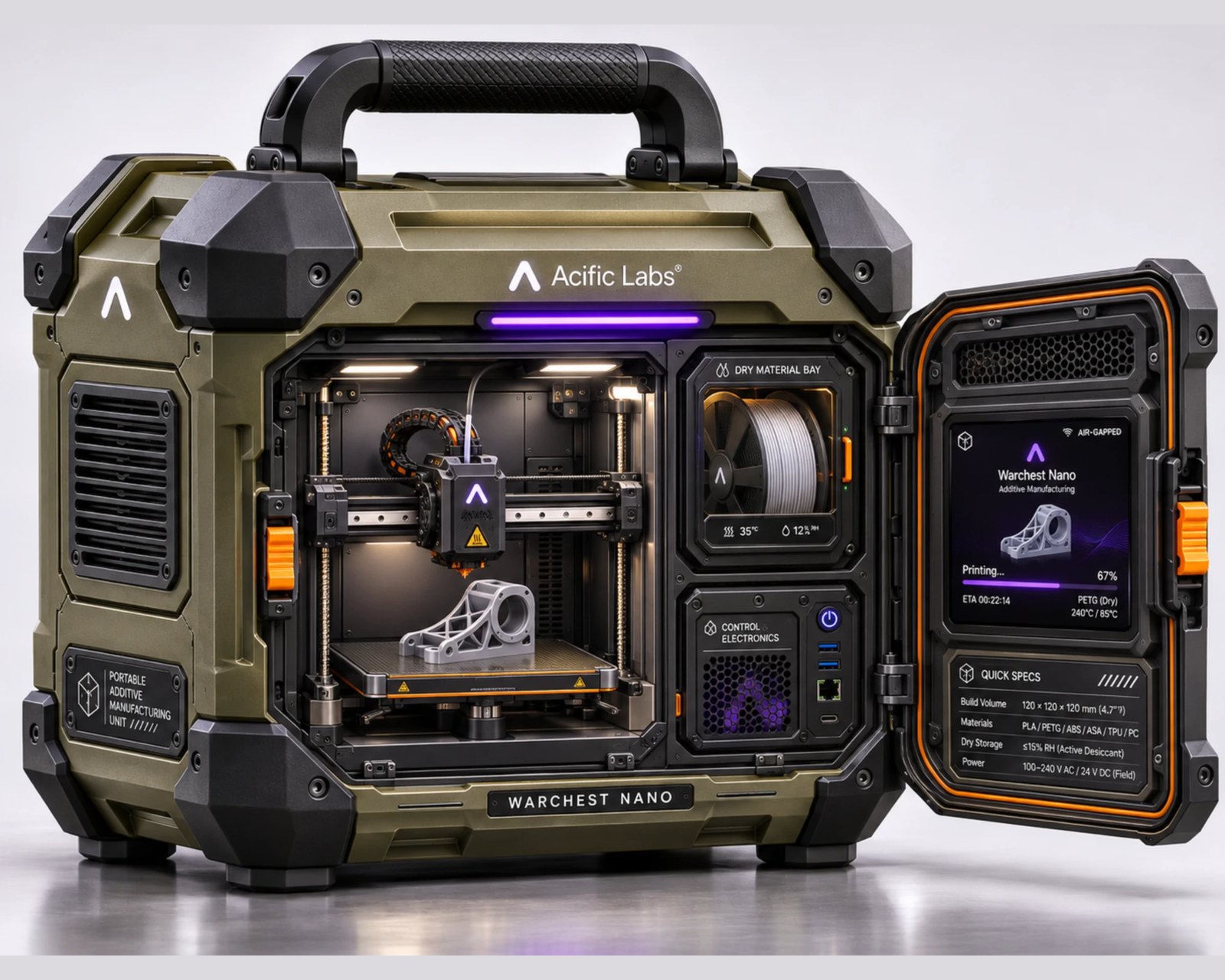
The door swings out to show the print bay, the dry Material Bay and the control electronics. The display rides on the door.
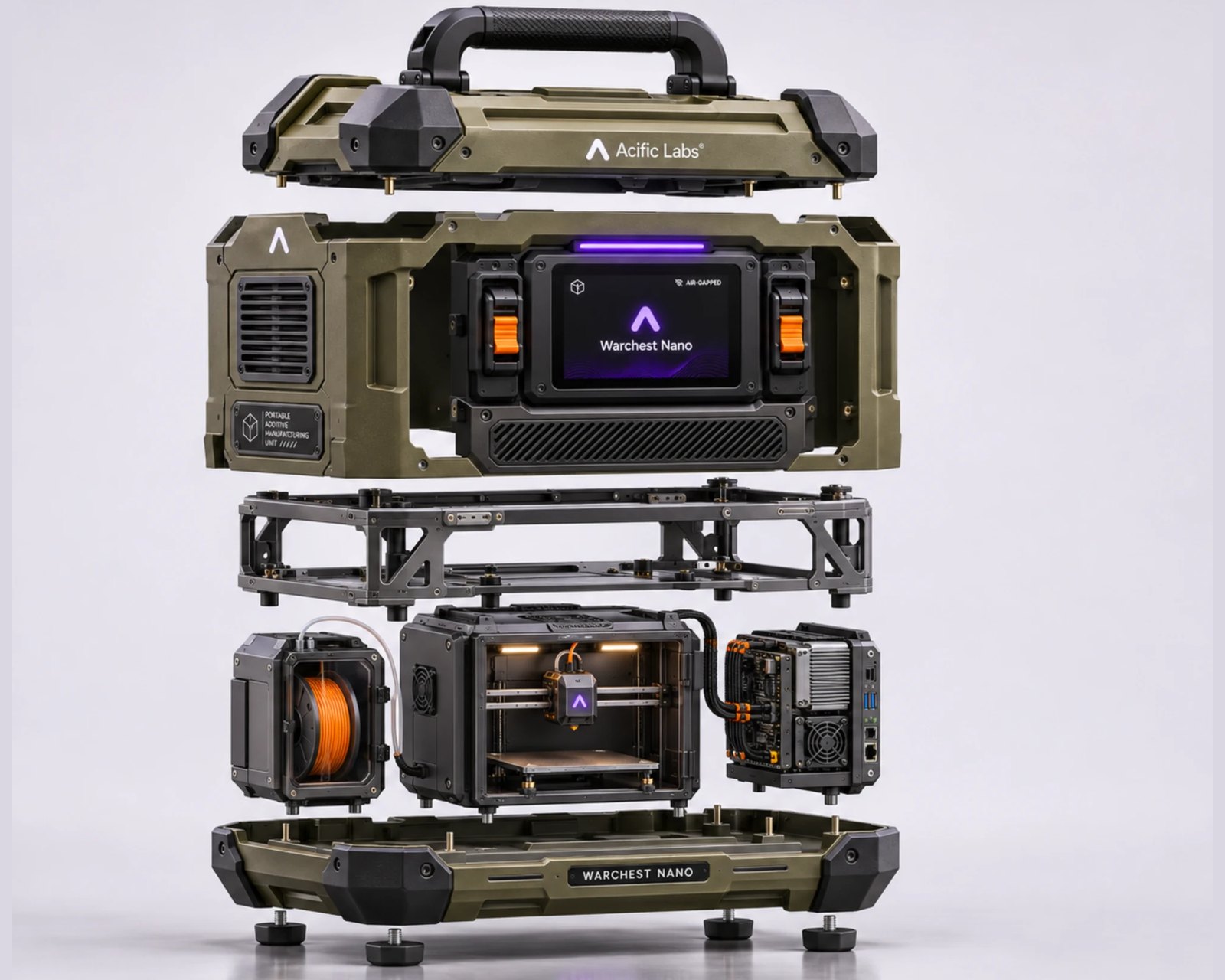
Top shell, armored body, precision frame, three swappable modules and a base tray. Each comes apart for field service.
Set it on a field table, connect a Power Block and print from an approved file. No network involved.


Concept renders. Nameplates still read the former name, Warchest.
No radios fitted. Designs, licenses and updates arrive only as signed, encrypted packages on approved media.
Material, power, print and compute modules lock in and identify themselves. No threading, no pouring, no tools.
Each print carries a signed record: the file, the material lot, the machine and the operator.